
By Lisa Jorgensen, Publisher, Lake Chapala Reporter
I lived at Lake Chapala for nine years. I wrote five editions of the definitive relocation guide. I built three news websites covering the area, and have over a decade reporting on the community I had chosen as my home.
And then I left — not back to the United States where I had spent most of my adult life, but all the way to Denmark, the country where I was born.
This article is about why people leave Lake Chapala. It is also, in part, about why I did. I have been writing about this community for fourteen years, and have always tried to be honest with my readers. This seems like the right moment to extend that honesty to a subject most expat publications never touch.
The Homing Instinct
About ten years ago, Denmark changed its law to permit dual citizenship. I had been forced to give up my Danish citizenship decades earlier when I became an American citizen, a painful trade I had made because I had built a life in the United States and had no realistic alternative. When Denmark reversed that policy, I applied for dual citizenship immediately.
What I didn’t fully understand at the time was what that decision would set in motion.
I began decorating my Lake Chapala home with Danish paintings. I found myself reading Danish literature, listening to Danish music, following Danish news. I told myself it was nostalgia, a pleasant cultural connection to my roots. It took me longer than it should have to recognize what was actually happening.
I wanted to go home. Not to the United States, where I had lived for nearly seventy years and where my daughters still live. To Denmark, the country I had left in my formative years.
I think humans have a homing instinct, not unlike many animals. We can suppress it for years, even decades, especially when we are building something or running toward something new. But it persists. And sometimes, when circumstances align just right — a law changes, a citizenship is restored, a wave of nostalgia becomes impossible to ignore — it surfaces with a force that surprises even the person experiencing it.
Diane, a 70-year-old American woman whose Youtube account of leaving her Arizona home for Manila I’ve watched recently, describes something similar, though her homing instinct pulled her in a different direction. After months in the Philippines, she found herself searching the internet for her old address, staring at photographs of the kitchen where she had cooked for thirty-eight years, and emailing the real estate agent who had sold the house to ask whether the new owners might consider selling it back. They wouldn’t. The life she had left was gone, and she was the one who had ended it.
Her story doesn’t end in defeat. It ends in hard-won wisdom. But it contains a warning that every expat at Lake Chapala should hear: the pull toward home, whatever home means to you individually, does not weaken with time. For many people it strengthens. And if you have burned every bridge behind you in your enthusiasm of a new beginning, you may find yourself, like Diane at 2am with pressure in her chest in a Manila apartment, realizing that no one nearby knows which medications you take, where your documents are stored, or what decisions you would want made if you couldn’t speak for yourself.
What Nobody Tells You About Small Communities
Lake Chapala is often described as a paradise, and for many people, for many years, it genuinely is. The climate is extraordinary. The cost of living is manageable. The community is warm and welcoming in the early years.
But Lake Chapala is also, in many ways, a small town. And small towns have small-town dynamics that become more visible the longer you live there.
The expat community at Lakeside is close-knit in ways that can feel both comforting and constraining. There are a finite number of leadership positions — on art committees, charity boards, community organizations — and competition for them can be fierce and occasionally unpleasant. Social hierarchies form and calcify. The same faces appear at the same events. Opinions travel fast and are not always handled generously.
For many expats, this feels like community. For others, particularly those who came from larger, more anonymous urban environments, it can eventually feel like high school.
The intellectual landscape is similarly limited. Lake Chapala draws primarily middle-class retirees seeking a comfortable, affordable, relaxed life in a beautiful setting. That is a perfectly legitimate thing to seek, and the community delivers it. But if you are someone who craves stimulating conversation, cultural diversity, bookstores, and the kind of cosmopolitan energy that comes from a city with real ambition and real industry, you will eventually notice its absence. Mexico’s more sophisticated retirees — executives, academics, artists of serious reputation — tend to gravitate toward San Miguel de Allende or Mexico City, where the cultural infrastructure matches their cosmopolitan interests.
This is not a criticism of the people who choose Lake Chapala. It is simply an honest description of what the community is and what it is not.
The Lake Itself
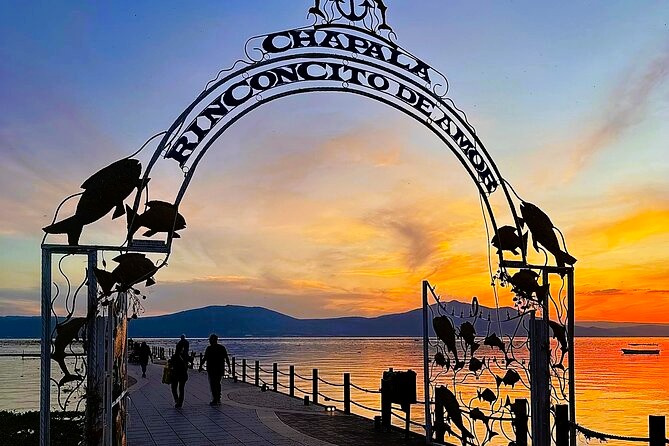
There is something that has been an open secret at Lakeside for years and that rarely appears in expat publications: Lake Chapala is seriously polluted.
A 2024 peer-reviewed study covering the period 2010-2023 concluded that the water quality of Lake Chapala is poor, with a high degree of contamination, representing ecological and health risks. Heavy metal contamination levels were found to be moderate to high, and the lake water was assessed as not suitable for drinking and posing a high health risk via ingestion.
In early 2024, an algal bloom tinted the water green along the shores of San Juan Cosalá and Ajijic, caused by low water levels combined with high temperatures creating excess nutrients. The bloom introduced toxins into Guadalajara’s drinking water supply.
This is why there are no beaches at Lake Chapala in the conventional sense. No waterfront hotels. No swimming. The lake that gives the region its name and its beauty is largely inaccessible for recreational contact, and has been for years. It is also why lakefront properties are not more expensive than comparable homes elsewhere in the area. The lake looks beautiful from a distance. You simply cannot use it the way a lake is supposed to be used.
The pollution is not a secret locally. It is simply not discussed in the publications and forums that shape the image of Lake Chapala for prospective arrivals. After fourteen years of publishing the Lake Chapala Reporter, I believe my readers deserve to know the truth about the water they live beside.
Garbage, Animals, and the Weight of Corruption
These are harder things to write about. But they are real, and they affected me more than I initially expected.
Mexico’s relationship with waste management is genuinely different from what most North American expats are accustomed to. Furniture, garbage, and refuse of all kinds end up in streams, ravines, and natural areas. The gap between the beauty of the landscape and what is sometimes done to it is jarring, and it does not become less jarring over time. If anything, for those of us raised with strong environmental standards, it becomes more distressing. The same is true of the look of the towns. There is often rubble and construction materials left helter-skelter.
The treatment of animals is similarly difficult for many expats to absorb. Dogs kept on rooftops their entire lives, on chains, with minimal human contact. Horses visibly underfed. A general relationship with working and street animals that reflects a very different cultural understanding of their needs and status.
None of this makes Mexico or Mexicans bad. It reflects a different set of priorities shaped by poverty, different cultural traditions, and a government that lacks either the resources or the consistent will to enforce environmental and animal welfare standards. But understanding the explanation does not always make the daily reality easier to witness.
And then there is corruption — systemic, pervasive, and wearying in a way that is difficult to convey to someone who has not lived inside it for years. As I documented in the Real Estategate investigation, I found that even the expat community is not immune: when corruption becomes the ambient condition of daily life, some people adapt to it in ways they would never have considered at home. Local government adjudicates by relationship and bribe as often as by law. Gas stations require vigilance. Transactions that should be simple require watching your back.
I was born in Denmark — one of the least corrupt countries on earth, consistently ranked in the top three globally for transparency and rule of law. I had spent most of my adult life in the United States — imperfect, but operating within a recognizable framework of institutional accountability. Living for nine years inside a system where corruption was simply the texture of daily life wore on me in ways I didn’t fully recognize until after I left.
I haven’t touched on the more perhaps well-undestood reasons why people leave: health concerns, the reported violence, and wanting to reconnect with family and friends and familiar neighbohoods and customs. These have probably already occured to you.
When Enough Becomes Enough
For me, none of the above — the small-town social dynamics, the intellectual limitations, the pollution, the environmental grief, the corruption — was catastrophic on its own. Lake Chapala remained genuinely beautiful. The climate remained extraordinary. The friendships I made were real. The work I did there mattered.
But things accumulate. The roosters and church bells and fireworks that charmed me in the early years became background noise I stopped hearing. The social politics that had once seemed manageable became tiresome. The lake I looked at every day remained beautiful and remained poisoned. The corruption that had once seemed like a colorful cultural quirk revealed itself, year after year, as something heavier.
And underneath all of it, the Danish paintings on my walls kept multiplying.
What Diane Learned — And What I Learned
Diane’s account of her Manila experience contains wisdom that applies directly to anyone at Lake Chapala who has felt, even fleetingly, the pull toward somewhere else.
She writes that she regrets not staying in the Philippines — she regrets the way she left. She sold everything before she truly understood what daily life there would feel like beyond the excitement of arrival. She burned bridges she didn’t need to burn. She made permanent decisions — selling the house, giving away the furniture, cutting every tie — before she had lived through a difficult week, a lonely month, a frightening night alone.
“I don’t regret moving to the Philippines,” she says. “I regret believing I had to destroy every bridge behind me to prove I was committed.”
If I could offer one piece of advice to any expat at Lake Chapala who is beginning to feel the pull toward home — whether that home is the US, Canada, Denmark, or anywhere else — it is this: you do not have to decide everything all at once.
Visit first. Visit for long enough to feel what ordinary life actually feels like there — not a holiday, not a hotel, but a rented apartment, a fixed budget, a week when nothing goes right. Keep your options open longer than feels comfortable. Maintain connections. Plan regular visits. Build a financial cushion that gives you the ability to change your mind without catastrophe.
And be honest with yourself and with the people who love you about what you are feeling. Diane spent months hiding her fear from her children because she didn’t want to admit she was struggling. It didn’t make the fear go away. It just made her face it alone.
The Community That Stays
I want to be clear about something before I finish.
Most of the people who live at Lake Chapala are not planning to leave. Most love it — genuinely, sustainably, without reservation. The ones who thrive long-term tend to have made peace with its limitations, built genuine friendships that go beyond the expat social circuit, and found enough intellectual and creative stimulation to keep their minds engaged. Many have been here fifteen, twenty, twenty-five years, and would not trade it.
But Lake Chapala – indeed, Mexico – is not for everyone. No place is. The question is not whether it is a good place — it is — but whether it is the right place for you, over the long arc of a life, not just in the excitement of arrival.
For me, after nine years, the answer was Denmark. I did not leave in crisis. I left in clarity. The Danish paintings on my walls had been trying to tell me something for years. I am glad I eventually listened.
Note: Here is the Youtube video of Diane’s experience.
Next in the Lake Chapala Insider: Safety at Lake Chapala — an honest assessment of what the risks actually are, what’s rumor versus reality, and what precautions actually make a difference.