
By Lisa Jorgensen, Publisher, Lake Chapala Reporter
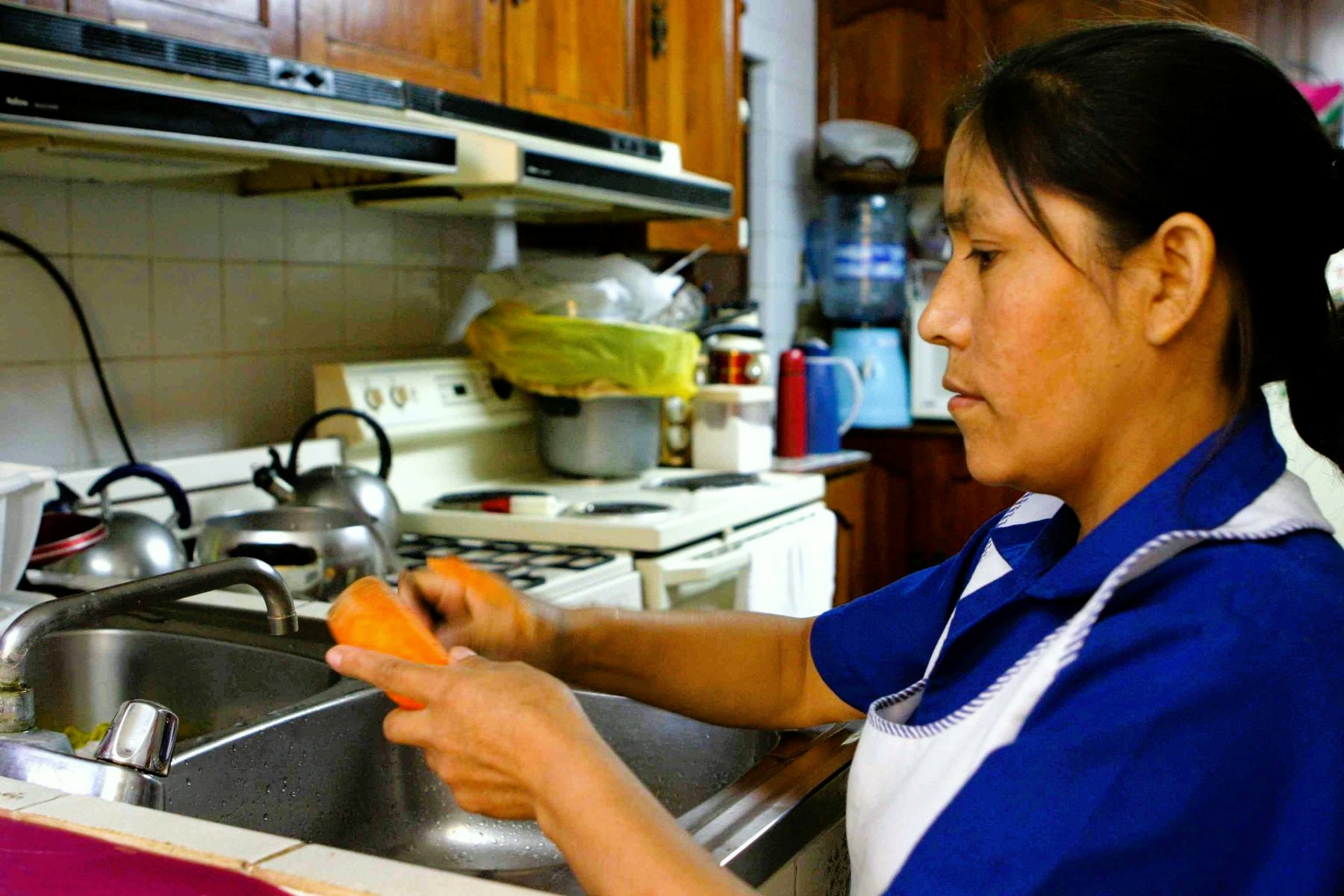
Almost every established household at Lake Chapala has someone who helps: a housekeeper, a gardener, a pool person, a handyman, a cook, or a caregiver. Wages are low by North American standards, and the people who do this work are often the backbone of a household’s comfort and security.
What newcomers rarely realize is that hiring even one person for one day a week makes you an employer under the Ley Federal del Trabajo, a famously worker-protective labor code. Mexican advocates for domestic workers have long made the point that this is employment, not “ayuda” (help). The law doesn’t distinguish between part-time and full-time workers, and it doesn’t care that you are a foreign retiree who just wants someone to mop on Tuesdays.
The good news is that you don’t have to take on that role yourself, if you don’t want to. Hiring through a service puts the legal obligations on the service company. Many residents choose that route.
This article covers whom to hire, the service alternative, what to pay, what the law requires if you hire directly (including the aguinaldo, due every year by December 20), what it really costs, how to document it, and how to end the relationship legally.
Employee or Contractor?
Not everyone who works at your house is an employee, and that distinction matters.
Usually an employee: the same person who comes every week or every two weeks on a regular schedule, usually materials you pay for, and does the work you direct. That covers housekeepers, regular gardeners, pool person on a fixed schedule, and caregivers. Part-time doesn’t change this.
Usually a contractor: the painter, plumber, electrician, or roofer hired for a specific job at an agreed price, who brings his own tools, and decides how to do the work.
The gray zone is the handyman or gardener who comes “whenever you call.” If you are unsure, assume that a long-running regular arrangement is employment, and ask a lawyer before you assume otherwise.
If you hire through a cleaning, gardening, or pool service, this question mostly disappears, because the service company is the employer, and you are simply a customer.
Finding Good Help
The best sources are personal.
- Your neighbors. Ask whom they use, and how long they have used them. Someone who has worked for the same household for ten years is the best reference available.
- The previous owner or tenant. As I noted in my utilities article, the most underrated thing you can inherit with a house is the previous owner’s list of service people. Ask for introductions, and ask whether anything is owed to them, and whether they would like to continue.
- Your landlord or property manager, if you rent.
- Other workers. A good housekeeper usually knows a good gardener, and vice versa.
Whomever you hire, copy their official ID (INE or passport) and CURP, get a phone number and an emergency contact, and agree on a short trial period. Pay attention to how they treat your home and your things during the first few weeks.
The Easier Route: Hire a Service Instead
Everything below about wages, aguinaldo, and IMSS applies when you hire someone yourself. There is another way, and many residents end up choosing it: hire a cleaning, gardening, or pool service instead of an individual.
You pay the company a fee. The company decides who comes, pays them, and carries all the legal obligations of an employer: wages, aguinaldo, vacation, IMSS, and severance. You deal with an invoice rather than payroll.
What you gain
- No employer paperwork. No aguinaldo calculations, vacation tracking, IMSS registration, or receipts to keep.
- No dismissal risk. If you’re unhappy, you ask for a different person or end the service. You are not facing a severance claim.
- Continuity. If your housekeeper is sick or on vacation, the company sends someone else.
- Professional equipment and chemicals, which matters most for pool and garden work.
What you give up
- Cost. Expect a higher hourly rate than hiring directly, since the company’s own costs and margin are built into the price. Get two or three quotes.
- Personal relationship. You may or may not get the same person every visit, and the long, loyal bond many expats have with one housekeeper is harder to build.
- Direct control. The company, not you, manages the worker.
Questions to ask before you sign up
- Is the company a registered business, and will it give you an official invoice (factura)?
- Are its workers enrolled in IMSS?
- Who is responsible if something is damaged or broken, or if a worker is injured at your house?
- Does it screen its workers, and who will have your keys?
- Can you request the same person each visit?
- How do you stop the service?
- Can they provide local references?
One caution: a “service” that is really one person with a business card, working only for you on your schedule and under your direction, may not shield you from employer obligations. If you’re unsure whether a particular arrangement really passes the employer role to someone else, ask a lawyer.
If You Hire Directly: What to Pay
The legal floor. For 2026, the minimum for domestic workers is 342.47 pesos per day in most of the country, set by CONASAMI as a professional minimum for the trade (about 43 pesos per hour for an 8-hour day). This is higher than the general minimum wage of 315.04 pesos, a distinction that trips up many budgets.
The market. Expats at Lakeside typically pay well above the floor. One cost-of-living database put the average cleaning rate in Chapala-Ajijic at roughly 100 pesos per hour as of mid-2025, though that average rests on only eight data points. Treat it as a starting point, and ask your neighbors what they pay.
A widely repeated rule among long-term Mexico residents is to find the range of going rates for the kind of work you need, and pay at or near the top of it. Better pay buys reliability and loyalty, and the cost difference is small against what you would spend on turnover.
Specialized work costs more. Caregiving for someone who is ill, skilled cooking, or live-in work is negotiated upward. If you employ a live-in worker, do not treat room and board as a substitute for wages. Live-in workers also have legal rest requirements, including a weekly rest day and rest at night and during the day.
What the Law Requires: An Overview
If you hire someone directly, these are your obligations:
| Obligation | What it means |
|---|---|
| Minimum wage | At least 342.47 pesos per day (2026) |
| Weekly rest day | At least one paid rest day per week |
| Aguinaldo | At least 15 days’ pay, due by December 20 each year, cash only |
| Vacation | Paid days off that grow with seniority, plus a 25% vacation premium |
| IMSS registration | Mandatory social security enrollment, paid by you |
| Written notice and severance | Required if you dismiss without just cause |
The next sections cover the three that cost real money: the aguinaldo, vacation, and IMSS.
The Aguinaldo: Your Annual Christmas Bonus Obligation
The aguinaldo is the one obligation that almost every Lakeside housekeeper and gardener knows by name and counts on. It is a legally required annual bonus, not a gift, and not paying it is among the most common causes of disputes.
The rule. Every employee, including domestic workers, is entitled to at least 15 days of pay each year. It must be paid by December 20, in cash or by transfer, with a signed receipt. It is a minimum. Many employers pay more, especially for long-serving workers.
Partial years. If someone worked for you less than a full year, she is owed a proportional amount for the time worked. If she quits or is let go before December, the proportional aguinaldo is part of what she is owed on leaving.
How to calculate it. For a part-time worker, this rule of thumb matches the standard method: take everything you paid her during the year, divide by 365, and multiply by 15. That is about 4.1% of her annual pay.
Example 1: a housekeeper, full year. She comes twice a week and earns 800 pesos per visit.
- Annual pay: 800 × 2 × 52 = 83,200 pesos
- Aguinaldo: 83,200 ÷ 365 × 15 = about 3,420 pesos
Example 2: a gardener who started mid-year. He comes once a week at 600 pesos per visit and began in mid-August, about 20 weeks before year end.
- Pay for the year: 600 × 20 = 12,000 pesos
- Aguinaldo: 12,000 ÷ 365 × 15 = about 493 pesos
Practical points:
- Put the amount aside month by month so December doesn’t hurt.
- Pay it comfortably ahead of the 20th. Paying late is how small misunderstandings become formal claims. Also, workers usually use the aguinaldo for their Christmas shopping, so a little more time is appreciated.
- Get a signed receipt every year, and keep it. (See the paperwork section below.)
- Any extra Christmas gift, such as a food basket, a bonus, or presents for her children, is entirely separate and discretionary. As noted in our utilities article, tipping the garbage crew at Christmas is near-universal on most streets, and that is also separate from anything you owe your own staff.
- Do not hire children, or give gifts of money to children (even for holidays). In many families, it will be used by the adults as family income.
Vacation and the Vacation Premium
Under the 2023 labor reform, employees now earn a longer paid vacation than they used to. The minimum schedule for each year of service:
| Years of service | Paid vacation days |
|---|---|
| 1 | 12 |
| 2 | 14 |
| 3 | 16 |
| 4 | 18 |
| 5 | 20 |
| 6–10 | 22 |
| 11–15 | 24 |
On top of the vacation pay itself, the worker is owed a vacation premium (prima vacacional) of at least 25% of the vacation pay.
For a part-time worker, the same “days of pay” logic applies, so the amount scales with how many days she works. Have your accountant or lawyer set the figure once at the start and update it each year. Ideally the worker actually takes the time off. Many employers settle the vacation pay and premium in December alongside the aguinaldo, but ask your lawyer whether that approach is safe for your situation.
IMSS: Social Security for Your Household Staff
It is mandatory. After a Supreme Court ruling in 2018 and a pilot program in 2019, IMSS registration for domestic workers has been obligatory since 2022. Employers register both live-in and day workers. The worker is then covered for sickness and maternity, workplace injury, disability and life insurance, and retirement. If a worker has several employers, each pays a share based on the days she works for that household.
Compliance is low. Press reports in mid-2026 said that fewer than 2% of domestic workers have social security access. Most Lakeside households do not register their staff, and enforcement against individual homeowners is rare.
Why register anyway. The practical argument is protection rather than fear of a raid.
- An on-the-job injury, such as a fall from a ladder while washing windows or a cut from garden equipment, becomes your direct financial responsibility if she is not enrolled.
- Registration builds a documented employment record that helps you in any later dispute.
- It gives her real health coverage and a pension path. For a person you may have relied on for years, that matters.
What it costs. Registration costs vary with the wage and the number of days worked. As an illustration only, one 2026 online calculator put the monthly payment at roughly 1,150 pesos for a worker earning about 4,000 pesos a month (two days a week), and roughly 1,400 pesos for one earning about 5,000. That is about 28% on top of salary. Some estimates run higher. Use IMSS’s own online calculator for your real number.
One question remains unsettled: sources conflict on whether the 5% INFONAVIT housing contribution is now mandatory for domestic workers. Confirm this with your accountant.
How to register. Register on the IMSS website in its section for domestic workers, or at an IMSS office. You will need your own identification, residency card, CURP, and RFC, and the worker’s CURP and social security number. A Mexican accountant (contador) can handle the registration for you, so ask what they charge.
What It Really Costs
Here is an illustrative case: a housekeeper who comes twice a week for five hours at 100 pesos per hour.
- Headline wage: 500 pesos per visit, about 4,330 pesos per month
- Aguinaldo set aside: about 180 pesos per month (roughly 2,140 per year)
- IMSS: roughly 1,150–1,400 pesos per month
- Vacation and premium: roughly another 4% of pay
As a rough planning figure, a fully compliant arrangement costs about a third more than the headline wage. For this housekeeper, that is about 5,900 pesos a month, or roughly $325 USD. That is more than the informal figure, and still a fraction of what equivalent help costs back home.
Paperwork That Protects You
In practice, the burden of proof in a labor dispute falls on the employer. If a dispute arises, it is up to you to show what you paid and when.
At the start
- A simple written agreement in Spanish: her name, address, start date, days and hours, tasks, daily wage, and rest day. One page is enough.
- A copy of her ID, CURP, and an emergency contact.
Throughout
- A signed receipt for each payment, or at least a monthly summary she signs.
- A signed receipt for the aguinaldo every year, and for vacation pay.
- A record of any advances.
Keep everything indefinitely. Photograph the signed receipts and store them with your other documents. Mexican bureaucracy runs on paper, as my legal basics article showed, and this is a clear case for it.
Ending the Relationship
How you end it determines what you owe.
If she resigns. She is owed the finiquito: unpaid wages, proportional aguinaldo, and proportional vacation pay with the premium. Ask her to sign a short written resignation and a receipt.
If you dismiss her without just cause. This is the expensive scenario. Under Article 50 of the labor law, she is owed the finiquito plus an indemnity of three months’ salary plus 20 days’ salary for each year of service. Domestic work has one exception that favors the employer: you are not obliged to reinstate her and may pay the indemnity instead. Other amounts, such as a seniority premium, may also apply, and a lawyer will calculate them.
Example. A housekeeper with five years’ service, on the 2026 domestic minimum of 342.47 pesos a day:
- Three months: about 30,820 pesos
- 20 days × 5 years: about 34,250 pesos
- Indemnity alone: about 65,000 pesos, or roughly $3,600 USD, before the finiquito
Most expats pay above the minimum, so the real figure scales up with her actual daily wage.
If you dismiss her for cause (theft, violence, serious misconduct), you must be able to prove it, and the notice generally has to be in writing. This route is risky. Never fire anyone who has been with you more than a few months without consulting a lawyer first.
If you are leaving Mexico or moving away, you are terminating the employment, so budget for the finiquito and, in most cases, severance. The kind thing is to introduce her to your buyer or new tenant. It can be worth asking your lawyer whether to ratify a termination agreement at the labor conciliation center, which makes it much harder to challenge later.
Common Problems and How to Avoid Them
Never lend money. As I covered in my safety article, lending money to household employees is one of the real risks at Lakeside, with serious consequences in some cases. Keep any wage advance small, documented, and deducted promptly. Don’t turn it into a loan.
Keys and access. My renting article covered the key arrangements for housekeepers and gardeners. Think about who has keys, whether copies are made, and when to rekey.
Valuables. Lock up cash, jewelry, passports, and documents. This is ordinary prudence, not suspicion.
Pay on time. Late or irregular payment is the most common source of resentment. Pay on the agreed day, every time.
Talk about expectations early. Tasks, hours, what happens when she is sick or late, and how you will handle a raise each January. A written agreement and a few honest conversations prevent most problems.
The Bottom Line
Household help at Lake Chapala is one of the real pleasures of expat life, and it can be fair, affordable, and good for both sides. You have two good ways to do it. Hire a service, and the company carries the legal obligations. Or hire someone directly, in which case pay at or above the minimum, pay the aguinaldo by December 20, give vacation, register her with IMSS, and keep a paper trail.
Many expats who start out hiring directly, informally, end up wishing they’d used a service from the start. If you do hire directly, the risks of skipping the paperwork fall mainly on you: a dispute where you can’t prove what you paid, an injury at your house with no coverage, or a dismissal that costs several months’ salary. A service avoids all of that for a modest premium.
Resources
- Domestic service companies: Google “cleaning service Ajijic” or similar, or check local web boards, like Chapala.com
- IMSS (domestic workers section): imss.gob.mx
- CONASAMI minimum wage tables: gob.mx/conasami
- Lic. Spencer McMullen: chapalalaw.com, 376-765-7553
Note: This article provides general information only, and does not constitute legal advice. Labor law and its application change, and every situation is different. Consult a qualified Mexican labor lawyer before dismissing an employee or if a dispute arises.